
Resilient Urban Forestry: Developing successful, cost-effective, urban forest strategies for areas of high- and low- tree mortality across the Mystic Watershed
This project will support a regional effort among municipal tree wardens and planners and community based organizations to collectively develop and implement climate resilient urban forestry plans. Because environmental conditions and climate impacts, such as rising temperatures, stormwater runoff, and pest outbreaks, do not adhere to municipal boundaries, it is essential to take a regional approach to urban forestry. Recognizing this need, the City of Cambridge, the Mystic River Watershed Association (MyRWA), and Weston & Sampson partnered to implement this initiative, supported by a Massachusetts Municipal Vulnerability Preparedness (MVP) grant.
When we are successful, Mystic Watershed communities will have thousands more climate- and insect-resilient trees to cool residents and visitors, improve natural habitat and stormwater quality, and potentially help mitigate flooding and drought. The first year of work will pull together existing municipal urban forestry plans and a standing committee of municipal tree wardens and community partners. Together they will identify gaps in resources, knowledge, and training needed to support a healthy urban forest across the watershed. The second year will support implementation of priority actions identified in the gap analysis. This will include peer learning across municipalities to improve urban forestry plans, update resilient species lists, pool professional training opportunities, develop shared maintenance contracts, and test strategies that decrease costs and maximize tree health and longevity, especially in urban heat islands.
The goals of this project are to:
Provide a snapshot of the watershed’s landscape, canopy cover, and urban forestry programs.
Explore shared challenges, opportunities, and values around trees among residents, municipal staff, and other local stakeholders.
Develop guidance for the planting, care, and management of urban trees.
Create a framework for watershed-wide tree canopy preservation and expansion
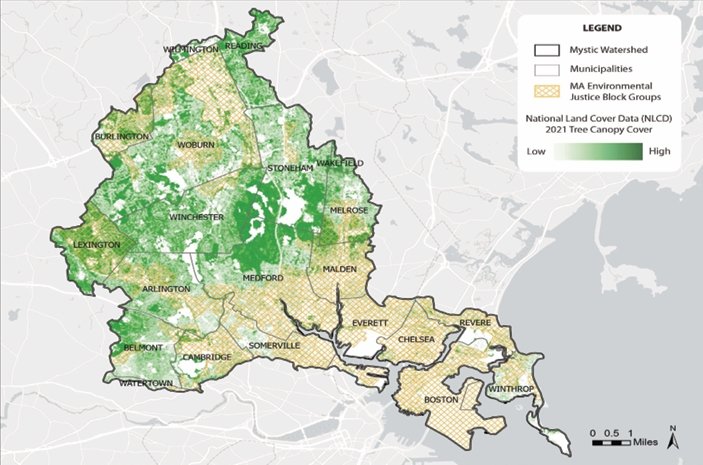
Source: National Land Cover Database.